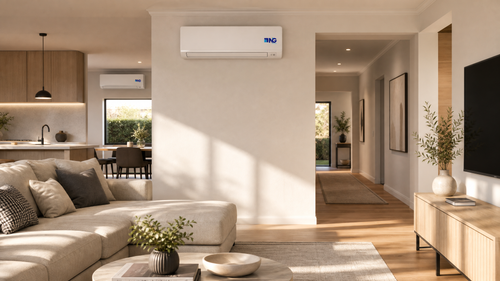
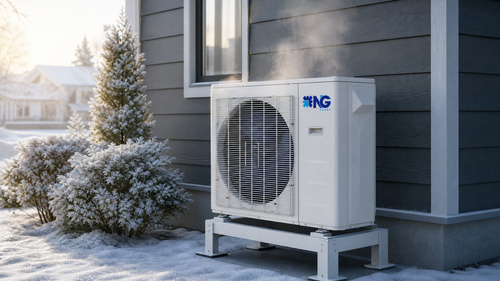
Every heat pump spec sheet leads with two or three ratings. They look like alphabet soup, but each one answers a plain question: how much cooling or heating do you get for each unit of electricity you pay for?
SEER2: cooling efficiency
SEER2 measures cooling output across a simulated season, divided by the electricity used. Higher is better. The "2" matters: in 2023 the test was updated to run units against more realistic conditions, so SEER2 numbers read slightly lower than the old SEER numbers for the same hardware. If you're comparing an older unit rated in SEER against a new one rated in SEER2, you're not comparing like for like.
Most new mini splits land somewhere in the teens to low twenties. As a reference point, the BLU+ Single Zone 12K is rated 21.3 SEER2, which is at the efficient end of the range.
HSPF2: heating efficiency
HSPF2 is the heating-side equivalent: heat delivered over a simulated season per unit of electricity. Same idea, same 2023 test update, higher is better. If you'll heat with the unit through real winters, HSPF2 deserves as much attention as SEER2.
EER2: the hot-afternoon number
Where SEER2 averages a whole season, EER2 measures efficiency at one fixed, hot condition. It's the better number for places with long, brutal summers. You'll see it in the spec table when it's available.
What Energy Star actually is
Energy Star isn't a rating, it's a certification. A unit either meets the EPA's efficiency bar for its category or it doesn't. Two things to know:
- It applies per model, not per brand or series. Some NG units carry it, others don't. Look for the badge and the spec table on each product page.
- It's a useful shorthand, but a non-certified unit with a strong SEER2 can still be an efficient machine. The certification draws a line; it doesn't tell the whole story.
Why inverters change the math
All NG systems use inverter compressors. Instead of switching on at full blast and off again, an inverter ramps up and down to match the load, the way cruise control holds a speed. Most hours of the year a room needs a fraction of the unit's full capacity, and running at partial speed is where inverter systems earn their efficiency numbers.
The short version
- SEER2 is seasonal cooling efficiency, HSPF2 is seasonal heating efficiency, EER2 is peak-heat efficiency. Higher is better on all three.
- Don't compare old SEER numbers against new SEER2 numbers directly.
- Energy Star is a pass/fail certification per model. Check the badge on the product page.
Every product page lists its ratings in the spec table. Questions about a specific model? Call (877) 811-1251, English or Spanish, Monday through Friday, 8 to 5 Pacific.